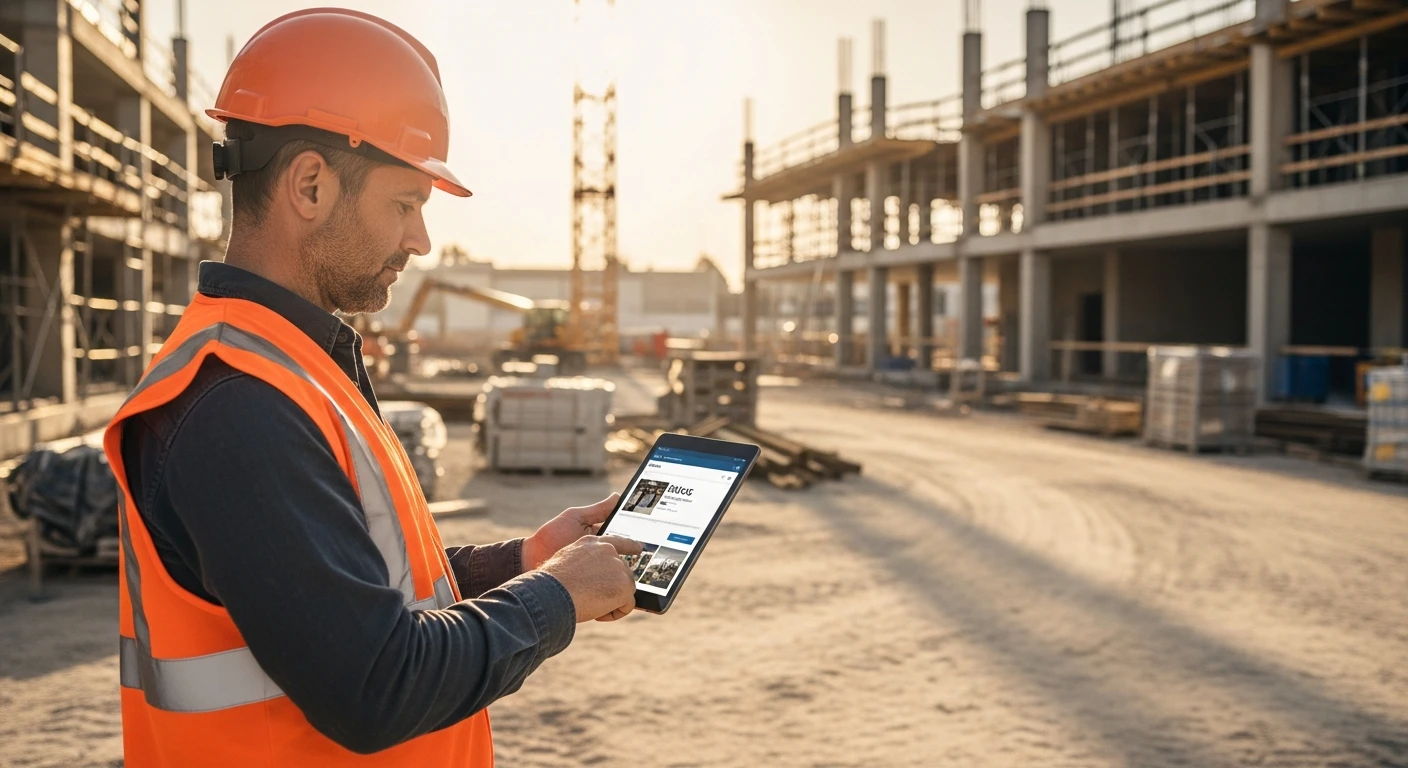
Vraag een aannemer wanneer hij voor het laatst een blogpost heeft geschreven. Stilte. Vraag wanneer hij voor het laatst op LinkedIn heeft gepost. Een onhandige glimlach. En vraag dan of hij weleens denkt dat het slim zou zijn om dat wel te doen, en het antwoord is: ja natuurlijk, maar wanneer dan?
Dat is niet luiheid. Dat is realiteit. In de bouw is iedereen op een project. De projectleider rijdt tussen vier locaties, de werkvoorbereiding loopt achter, en marketing voelt als iets van later. Tegelijk wordt er over u gepraat op LinkedIn, opdrachtgevers oriënteren zich daar, en stilte wordt steeds minder neutraal en steeds meer een rode vlag.
De drie routes die ik zie
Bouwbedrijven die hier wat aan willen doen kiezen meestal uit drie opties, en alle drie hebben hun eigen problemen.
Optie 1: een copywriter inhuren. Dit werkt, maar is duur. Een goede freelance copywriter kost al snel 80 tot 120 euro per uur, en heeft per post drie tot vier uur nodig om uw branche te leren kennen. Bovendien kent niemand uw bedrijf zoals u zelf. Wat eruit komt is altijd algemeen, soms zelfs een beetje generiek.
Optie 2: zelf doen. Goede intentie, geen tijd. De eerste maand komen er twee posts, daarna één, daarna verzandt het. Voor je het weet is het een half jaar later en is uw blog stil.
Optie 3: een marketingstagiair. Goedkoop, leuk, maar vaak gebrek aan vakkennis. De stagiair kan niet zelfstandig over uw projecten schrijven want hij heeft de werkvloer nooit gezien.
Wat een AI-marketingmotor anders doet
De variant die ik in een recent project voor een bouwbedrijf heb opgeleverd werkt anders. De aannemer geeft een onderwerp of een idee, en de tool maakt op basis van de Claude-AI een conceptpost. Tekst plus een passende afbeelding, gegenereerd door DALL-E. De aannemer leest het door, past aan waar nodig, en de tool plant het automatisch in op LinkedIn, eventueel ook Facebook of Instagram, plus de eigen blog.
De inhoudelijke regie blijft bij de bouwer. Niets wordt gepost zonder goedkeuring. Wat de tool wegneemt is de drempel om te beginnen, het zoeken naar passend beeldmateriaal, het herschrijven voor verschillende kanalen, en het bijhouden van wanneer wat gepubliceerd is. Wat in de oude situatie een halve dag was, is in de nieuwe situatie een halfuur.
Het doel is niet meer of beter posten
Hier wil ik iets eerlijks zeggen. AI-marketing maakt u geen betere copywriter. Het maakt uw posts niet ineens viraal. Wat het wel doet, en dat is voor een MKB-bouwbedrijf vaak genoeg, is zorgen dat u überhaupt post. Dat er activiteit is op uw kanalen. Dat een opdrachtgever die u opzoekt een actief profiel ziet in plaats van een grafsteen uit 2023.
De nuance is belangrijk: het is geen vervanging voor authenticiteit, het is een hefboom voor de tijd die u heeft. Een tool die u in staat stelt om met dezelfde inzet als nu (een halfuurtje hier en daar) consistent zichtbaar te zijn.
Wat het kost
Een platform zoals deze bouw je één keer, gekoppeld aan een eigen website. Daarna betaalt u alleen het AI-gebruik, dat voor een gemiddelde bouwbedrijf-output (twee tot vier posts per week) ergens tussen de 10 en 30 euro per maand uitkomt. Geen abonnement, geen freelance-uren, geen stagiair. Wel uw eigen woorden, alleen sneller op de plek waar opdrachtgevers ze kunnen zien.